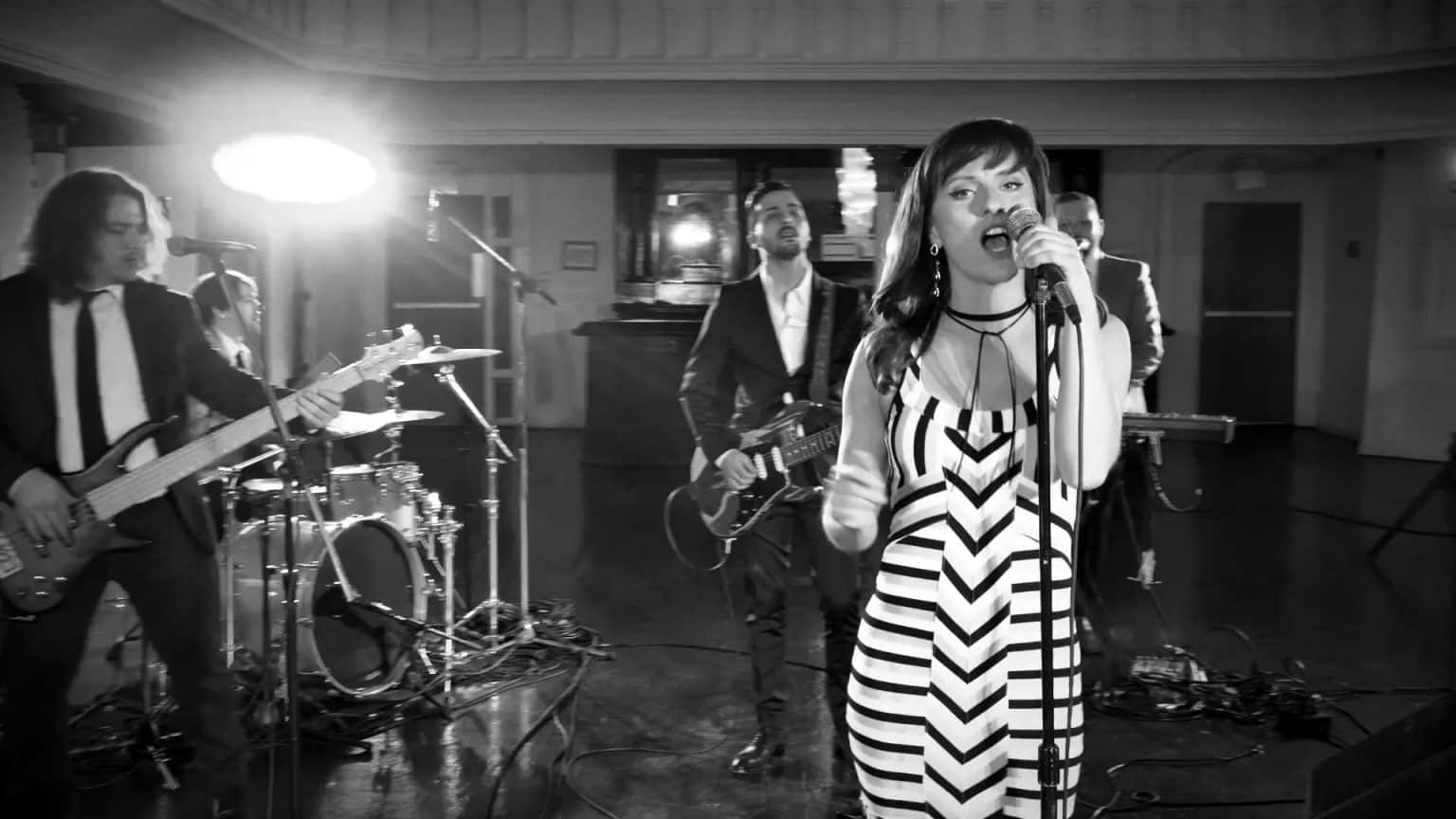
Why the best wedding setlists are built from your taste, our data and the room in front of us.
The best wedding reception playlists are not really playlists.
A playlist is fixed. It starts with song one and keeps going whether the room is ready or not. A great live wedding set does something different: it begins with a deep understanding of the couple, then changes shape in response to the people on the dance floor.
That is why we do not ask couples to program three hours of music for us. We ask them to tell us who they are.
We collect favourite songs, artists and genres; must-haves; do-not-plays; special dances; guilty pleasures; family traditions; cocktail and dinner preferences; and sometimes entire Spotify or Apple Music playlists. We combine that information with our request database, a repertoire built over hundreds of events, and a bandleader who can read the room in real time.
The result is personal without being rigid, planned without feeling programmed, and familiar without sounding like every other wedding.
A couple’s playlist is a brief—not a script.
We Start With Your Personal Music Taste
Every couple has a musical fingerprint. Some give us a carefully edited list of 20 songs. Others send several hundred tracks across multiple playlists. Some know exactly what they want. Others tell us what they never want to hear and trust us with the rest.
All of that is useful.
Our wedding music survey asks about the full event, not just the dancing. We want to know the timing, venue, guest count, musical configurations, first dance, parent dances, ceremony music, cocktail-hour style, dinner music, dance requests, must-haves and do-not-plays. We also ask questions that reveal taste more naturally: Are you genuinely excited by a power ballad? Is “Country Roads” a heartfelt singalong or a hard no? Does a throwback one-hit wonder sound fun or painful?
Those answers tell us more than a generic genre checkbox ever could.
Why Personalized Wedding Music Matters
Your wedding should sound like you, but it also has to work for everyone you invited.
The couple may love indie rock, while their guests range from children to grandparents. One family may want country; the other may be waiting for Motown, disco or ’90s pop. The answer is not to flatten everything into a safe, anonymous list. It is to find the overlap between your music taste and the songs that invite your guests to participate.
Personalization can be obvious, such as playing a sentimental must-have. It can also be subtle: choosing a requested artist, building a short run around a favourite era, or using the couple’s cocktail playlist to shape the mood without copying it song for song.
The goal is for the night to feel unmistakably theirs—even when we are playing a song they never submitted.
How Couples Help Us Build the Perfect Wedding Playlist
We prefer couples to give us more information rather than less. A long inspiration playlist shows patterns. Five ABBA songs tell us something different from one. A list full of The Killers, pop-punk and early-2000s radio suggests where the late-night set may want to go. A cocktail list built around jazz standards, soul and Norah Jones tells us how the room should feel before dinner.
But the couple is not responsible for turning that information into a wedding band setlist. That is our job.
We separate the input into broad inspiration, specific requests, must-haves, artist or genre preferences, do-not-plays, and music for fixed moments such as entrances and first dances.
Couples also send information after completing the survey. A cocktail playlist may arrive later, or a family performance may be added once the timeline takes shape. We consolidate everything into one event record so the musical brief can evolve without becoming scattered across emails and links.
How We Handle Do-Not-Play Lists
Do-not-play lists are useful guardrails.
Some couples want no line dances, no country, no explicit lyrics, no particular artist, or no song associated with a bad memory. Others are happy with almost anything except one track they have heard at every wedding since 2007.
We record those boundaries clearly and keep them visible in the bandleader’s working material. Reading the room should never mean ignoring the couple.
We do encourage couples to distinguish between “not my first choice” and “absolutely do not play.” A very long ban list can remove the flexibility that helps a live band respond to a mixed crowd. Clear priorities let us protect the couple’s taste while still giving the room somewhere to go.
How We Structure Wedding Reception Music Throughout the Night
A reception is not one musical environment. Cocktail hour, dinner, special dances, the opening of the dance floor and the final hour all have different jobs.
Cocktail Hour Music
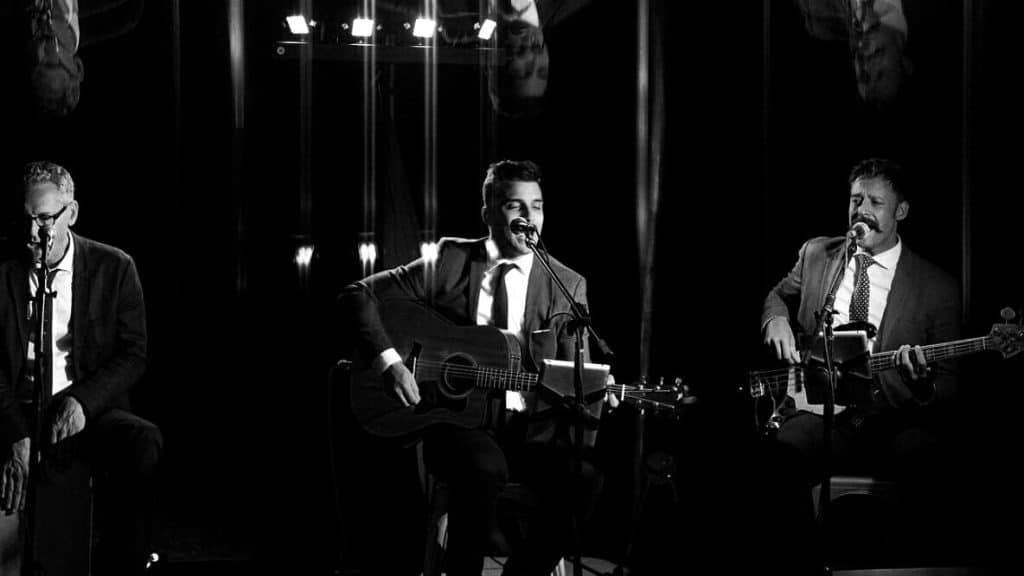
Cocktail hour music should establish character without demanding attention. Guests are arriving, reconnecting and moving through the space. The music needs enough identity to create an atmosphere, but enough restraint to leave room for conversation.
For one recent wedding, the couple sent 27 cocktail-hour requests after completing their survey. Their list included jazz standards, soul, vintage pop and contemporary artists with a classic feel. Our custom cocktail set for them contained 18 primary songs and five alternates. Sixteen of those selections were exact requests or direct artist-and-style responses to the couple’s list.
We did not reproduce the streaming playlist. We used it to build a coherent live set for the singers and instruments performing that day, with alternates available if the timing or mood changed.
Dinner Reception Music
Dinner reception music should support the room rather than compete with it. Volume matters, but sequencing matters too.
Many couples want an elegant beginning followed by a gradual lift as speeches end and dancing approaches. One recent couple asked us to place more upbeat dinner songs near the end to raise the energy before their first dance and Hora. That is not just a song request; it is an instruction about the transition between parts of the event.
When we manage recorded dinner music, we can also handle entrances, cake-cutting cues, edited parent-dance tracks and other specific moments.
Opening the Dance Floor
The first few songs have an outsized job: they must make it easy for guests to join in.
Sometimes dancing opens directly from the first dance. Sometimes it follows parent dances, a Hora, a cultural tradition or a family performance. The right opening depends on who is already standing, who still needs an invitation, and what happened immediately before the band began.
We generally favour broad, welcoming material early. Familiarity matters—not because every song must be obvious, but because guests are more likely to participate when they immediately understand the assignment.
Peak Dance Floor Energy
Peak energy is not created by playing the fastest songs back to back. It comes from contrast, timing and momentum.
A bandleader may build a run around disco, modern pop, rock, country or a particular decade, then change direction before the room becomes tired of it. A huge singalong can follow a tight dance track. A current song can be strengthened by something cross-generational beside it.
This is where a live wedding band has an advantage over a fixed wedding reception playlist. We can shorten songs, combine material, extend a chorus and change the next choice based on what guests are actually doing.

Late-Night Wedding Party Songs
Late-night wedding party songs can become more specific, nostalgic and adventurous.
By then, older guests may have left, the core crowd is committed, and the band has learned what the room responds to. This is often the right time for pop-punk, harder rock, hip-hop-influenced material, guilty pleasures or a sentimental song that would have been too narrow earlier.
The couple’s preferences help us anticipate this part of the night. The dance floor tells us when it is ready.
Planning Music for Key Wedding Reception Moments
Some parts of the night are flexible. Others deserve precision.
Grand Entrance Songs
A grand entrance song is a cue, not background music. We confirm the exact version, starting point and timing so the musical moment aligns with the emcee and the couple’s movement into the room. A song may need to begin at the opening beat, a chorus or a specific drop.
First Dance Songs
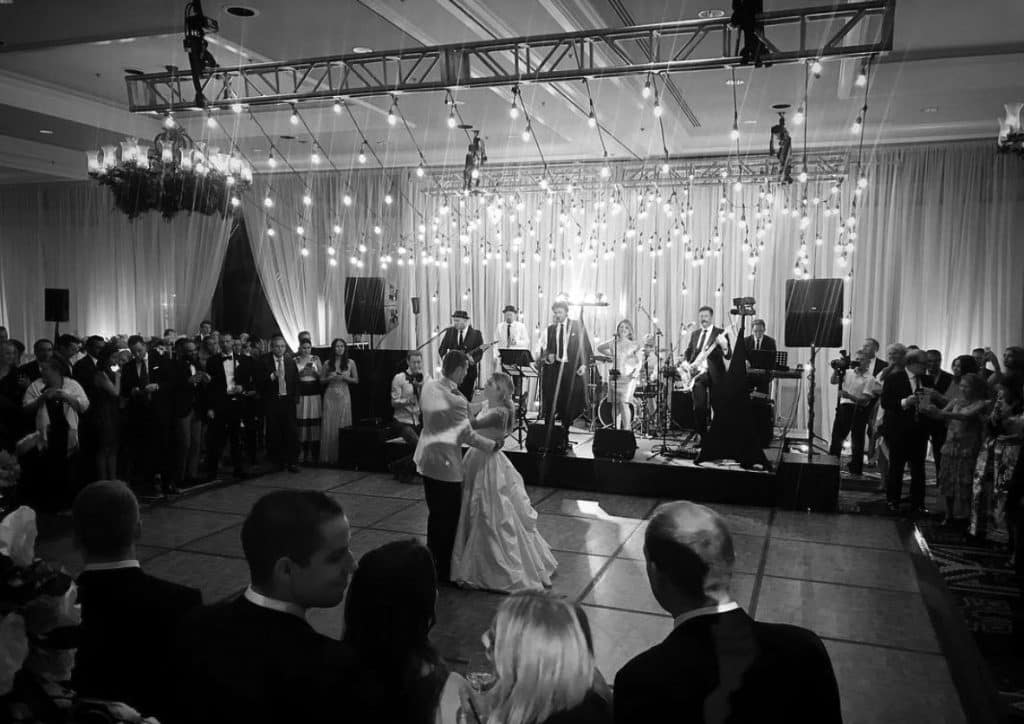
The couple may choose a song already in our repertoire, ask us to learn or arrange something, use a recording, shorten the track, or invite guests onto the floor partway through. The right choice is not always the most famous love song. It is the version that means something to the couple and can be presented confidently.
Parent Dance Songs
Parent dances often benefit from practical editing. A five-minute song can feel very long when two people are alone in the centre of a room. Couples may choose one shared song, separate songs, a shortened arrangement, or a planned transition that brings more family members onto the floor.
Last Song of the Night
Like a concert with your favorite band, we often do an encore if the crowd demands it. Sometimes we pull these from “must have requests” from the couple or from our special “epic” category of songs or something sweet and romantic to send the couple off or more often than not, a singalong.
How We Keep the Wedding Dance Floor Packed
There is no universal list of wedding dance floor songs that guarantees success. There are only good decisions made in the correct order.
Reading the Crowd in Real Time
We watch who is dancing, who is approaching, who is leaving and which parts of each song create a reaction. We notice whether the room responds to the groove, chorus, era, artist or shared memory attached to a song.
Our request database gives us a powerful starting point. As of 2026, workhorses such as “I Wanna Dance with Somebody,” “September,” “Uptown Funk,” “Don’t Stop Believin’,” “Mr. Brightside” and “Sweet Caroline” appeared near the top.
But request data is not a substitute for judgment. A song can be widely loved and still be wrong for the next three minutes.
Adjusting the Playlist Live
Our dance-band setlist is a working map, not a locked sequence.
Our working setlists use a simple shorthand: one star identifies a request; two or three stars flag an elevated or must-have request; a tilde marks an artist or genre preference; and “NO” keeps a do-not-play visible. The bandleader can see what matters to the couple at a glance while still choosing the next song based on the room.
During the night, the bandleader uses a private talkback microphone that only the musicians can hear. They can call the next song, redirect a transition, extend or shorten an arrangement, or abandon a planned choice without interrupting the guests. The setlist provides the map; the talkback mic lets the band pivot together.
At a recent wedding, the couple submitted 53 general dance requests and 14 must-haves. Eleven of those must-haves were built into the planned dance set, alongside a special family performance, cultural music and selections inspired by the broader list. Proven material connected those personal moments into a cohesive night.
That is the balance: honour as much input as possible without sacrificing the flow that makes the requests land.
Knowing When to Change Energy
A full dance floor does not always mean “more of the same.”
Sometimes a strong response means we should stay in the pocket. Sometimes it means we have reached the peak of a style and should move before the energy levels off. Sometimes the younger crowd is ready for a change while the broader room needs one more familiar bridge.
Experience is largely the ability to recognize that moment early.
Balancing Music for Every Generation at a Wedding
A wedding is one of the few parties where several generations are expected to celebrate together. That is not a problem to solve; it is one of the best opportunities in the room.
How We Blend Eras Without Losing the Room
We often begin with music that has broad reach, including soul, disco, classic rock, Motown and universally familiar pop. As the evening progresses, we can move toward newer or more specific music while using cross-generational songs as bridges.
The transition should feel natural, not like someone changed radio stations.
A strong wedding band setlist may move from Stevie Wonder to Earth, Wind & Fire, then to Whitney Houston, modern pop, a 2000s throwback and a current hit. The songs do not need to come from the same decade. They need to make sense to the same room.
Why A Live Wedding Band Create Better Wedding Reception Energy
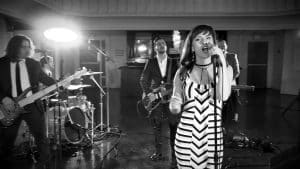
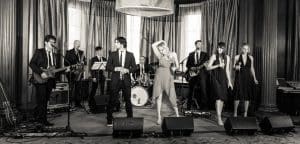
A live band does more than perform songs. It changes the social temperature of the room.
Guests see musicians reacting to them. Choruses can grow, endings can be extended and a singer can invite people forward. When the room changes, the bandleader communicates through the private talkback mic so the musicians can change direction together without the audience hearing the mechanics behind it.
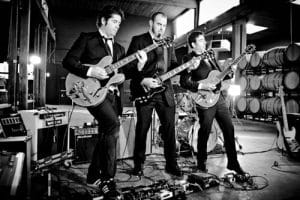
That flexibility is possible because we do not use backing tracks or a click track. We are not locked to a pre-programmed grid or fixed song length. Every part is played live, so the musicians can follow the bandleader, one another and the room. The performance is prepared, never predetermined.
That is why we treat wedding band playlists as informed, flexible plans. Your requests give the night its identity. Our database gives us a broad view of what couples consistently love. Our repertoire gives us options. The bandleader connects those ingredients to the crowd in front of us.
The best wedding reception music is not created by choosing between personalization and experience. It comes from using both.

Frequently Asked Questions
How Many Songs Do You Need for a Wedding Reception?
A typical 90 mins set of dancing can contain roughly 25 full-length songs per set and we often do 2 sets, but live arrangements, medleys, speeches and special moments affect the number. Couples do not need to select every song. A focused list of favourites, must-haves and do-not-plays is more useful than trying to program the entire reception.
Should We Give Our Wedding Band a Playlist?
Yes. A Spotify or Apple Music playlist is one of the best ways to show us your music taste. Treat it as inspiration rather than a final running order. We will identify patterns, include suitable requests and use the list to shape the wedding band setlist. I suggest finding a prefab one of typical wedding songs, copying and pasting and then add and subtract your favs.
What Songs Keep a Wedding Dance Floor Full?
Familiar, singable and rhythmically clear songs often work well, but context matters more than any universal top-ten list. The right song depends on the crowd, the time of night and the song that came before it.
Does The Live Wedding Band Take Requests?
Yes, but a request is information—not automatically the next song. Pre-event requests receive the most thoughtful planning. On-the-night requests may be included when they fit the couple’s preferences, the band’s repertoire and the energy of the room. If we know them and think they’ll work, we’ll try them! Sometimes we’ll even pull out the “all request encore” where we attempt to play 30 seconds of absolutely any request under the sun.